

A Modern Center for Nuclear Medicine for Small Animals
We help cats live longer, healthier lives thanks to innovative treatment of hyperthyroidism using radioactive iodine and advanced scintigraphy. The treatment success rate is 95% or higher.
Thanks to the very best diagnostic and treatment methods, we offer safe, effective and minimally invasive solutions to medical conditions, which improve the quality of life of your pets. We pride ourselves on an individual approach to each patient, close collaboration with referring vets, and a combination of cutting-edge diagnostics with safe and effective treatment.
The clinic is located at Úvalská 32, Prague 10, Strašnice.
The treatment is fully covered by Pet Expert insurance.

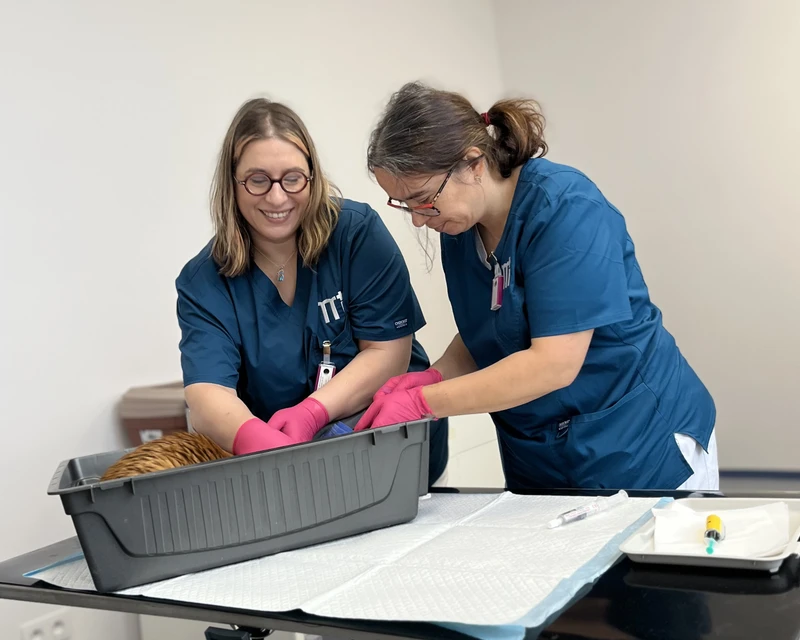
The first specialist centre for nuclear medicine for small animals in the Czech Republic
Our doctors – MVDr. Martina Načeradská, Ph.D. and MVDr. Mgr. Kateřina Návojová Horáčková – are among the leading experts in feline medicine in the Czech Republic and abroad.
We combine advanced diagnostics with innovative radioiodine therapy, which offers a safe and long-term effective solution for hyperthyroidism.
Thyroid scintigraphy
We perform scintigraphy using Tc-99. Scintigraphy is essential before starting treatment. It enables us to:
- confirm the diagnosis of hyperthyroidism,
- determine whether the condition is unilateral or bilateral,
- determine the optimal dose of I-131.
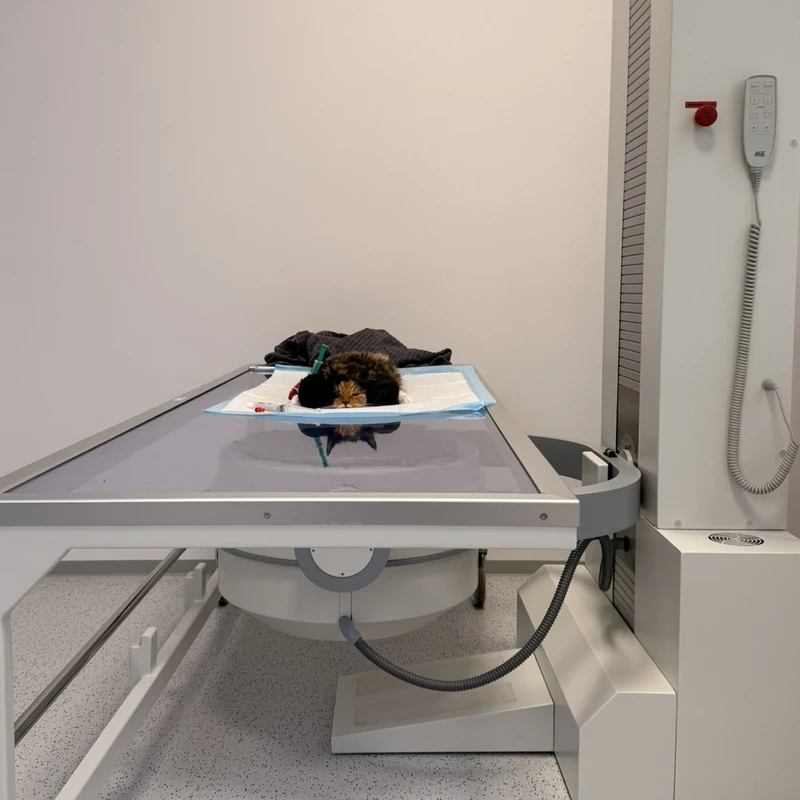
The examination involves the cat being scanned by a special gamma camera, which captures an image of the affected thyroid gland. This ‘lights up’ on the computer monitor.
This makes the treatment safer and more precisely targeted.
Treatment of hyperthyroidism in cats with radioactive iodine
Radioactive iodine is the most effective and safest method of treating hyperthyroidism in cats. It targets the thyroid tissue that is producing excessive amounts of hormones, whilst leaving healthy tissue unharmed. In most cases, a single treatment is sufficient. The success rate of the treatment exceeds 95%.
Inpatient care
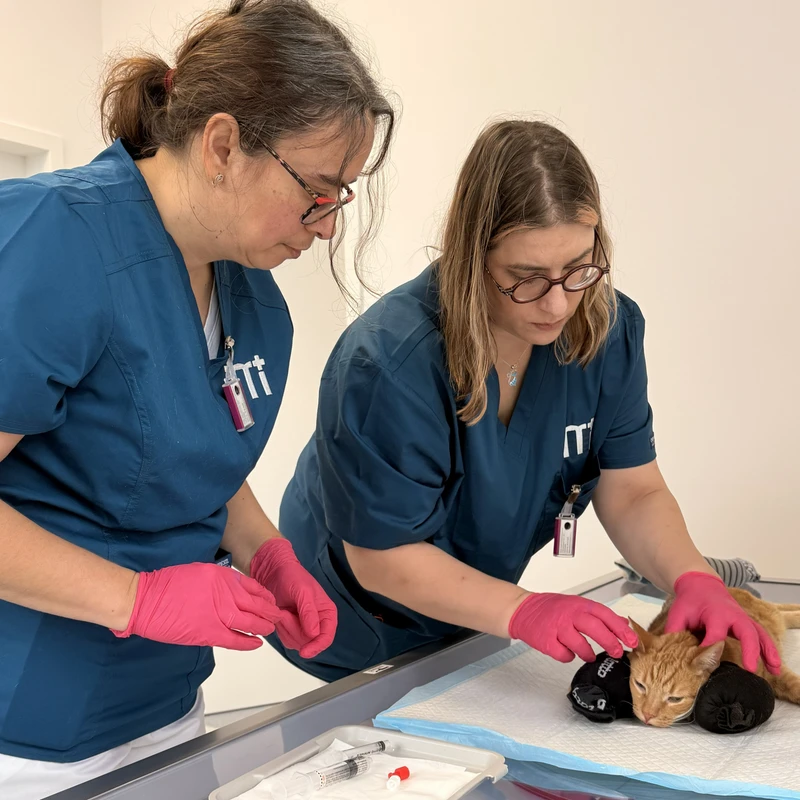
- Treatment involves a single intravenous injection.
- For radiation protection reasons, a short hospital stay is required – usually 4–5 days.
- During the stay, the cat is kept in a quiet environment under veterinary supervision.
Aftercare at home upon return
After returning home, a small amount of radioactive iodine remains in the cat’s body, which is excreted in the urine and faeces. It is therefore necessary to observe the following precautions for a period of 14 days.
Collect daily in double bags, store away from living areas for a further 14 days, and only then can they be disposed of in the normal rubbish. Keep a distance of 1–2 metres.
Keep close contact to a minimum and maintain a distance of 1–2 metres for 14 days. If there are children or pregnant women in the household, arrangements must be made to have the cat looked after by family members or friends so that there is no contact for at least 14 days.